
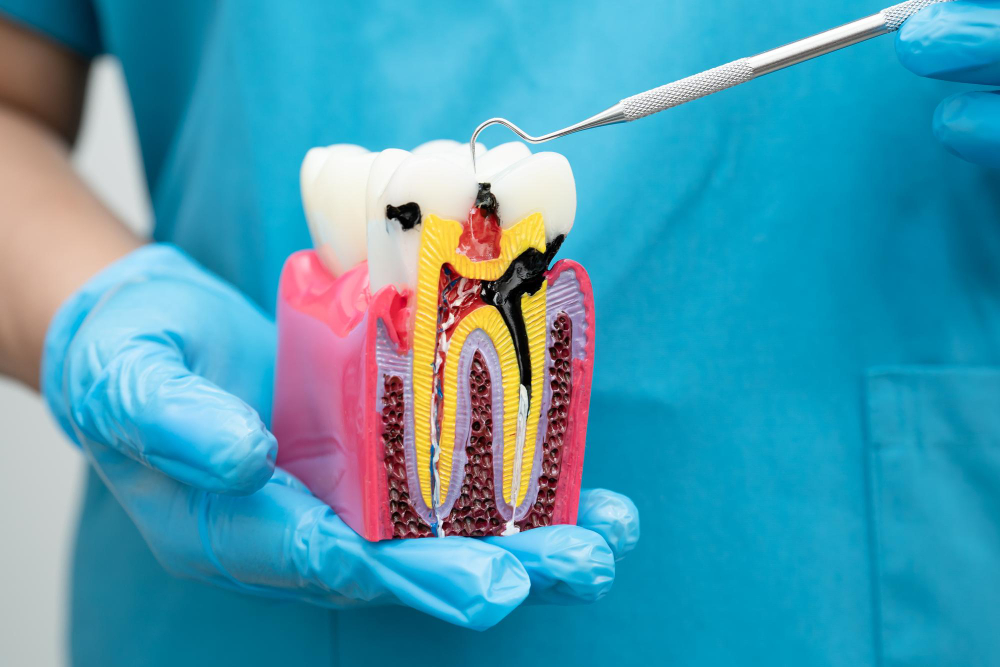
What Is Re-Root Canal Treatment?
Sometimes, a tooth that has had a root canal does not heal as expected. In these cases, dentists may suggest re-root canal treatment. This is also called root canal retreatment or a second root canal procedure. During this process, the dentist removes the old filling, cleans the inside of the tooth again, and places new filling material. As a result, the goal is to save the tooth and stop pain or infection. According to the American Dental Association, re-root canal treatment can help keep your natural tooth longer.
Signs and Symptoms Indicating a Tooth May Need Re-Root Canal Treatment
After a root canal, most people expect their tooth to feel better. However, some signs may show that the treatment did not work fully. If you notice any of these symptoms, you may need root canal retreatment:
Sometimes, symptoms appear months or even years after the first root canal. Therefore, regular dental checkups are important.
Common Causes for Re-Root Canal Treatment
There are several reasons why a tooth may need re-root canal treatment. Even with careful work, problems can happen. Here are some common causes:
For example, if a tooth has more roots than expected, some may be missed. Over time, this can lead to infection and the need for a second root canal procedure.
How Dentists Diagnose the Need for Re-Root Canal Treatment
First, your dentist will ask about your symptoms and dental history. Next, they will check your tooth and gums. X-rays are often used to look for signs of infection or failed root canal symptoms. Sometimes, dentists use special tools or 3D scans to see hidden problems. If you live in a city with advanced dental clinics, you may have access to the latest imaging technology. The dentist will explain the findings and discuss if re-root canal treatment is right for you.
Treatment Process for Re-Root Canal Procedures
Re-root canal treatment is similar to the first root canal, but it can be more complex. Here is what you can expect:
Sometimes, the dentist may refer you to a root canal specialist, called an endodontist, for this procedure. According to the American Association of Endodontists, retreatment can help save teeth that might otherwise be lost.
Risks and Considerations
While re-root canal treatment can be successful, there are some risks. For instance, the tooth may still not heal, or the infection may return. In rare cases, the tooth may crack or need to be removed. However, most people do well after retreatment. Dentists will discuss the risks and benefits with you before starting. Always follow your dentist’s advice and keep up with checkups to spot any problems early.
Tips for Preventing the Need for Re-Root Canal Treatment
Good dental care can lower your risk of needing a second root canal procedure. Here are some helpful tips:
For those seeking re-root canal treatment in your area, choosing an experienced dentist can also make a difference; consult at HItech Dental now